
- By
- November 16, 2025
- Transport
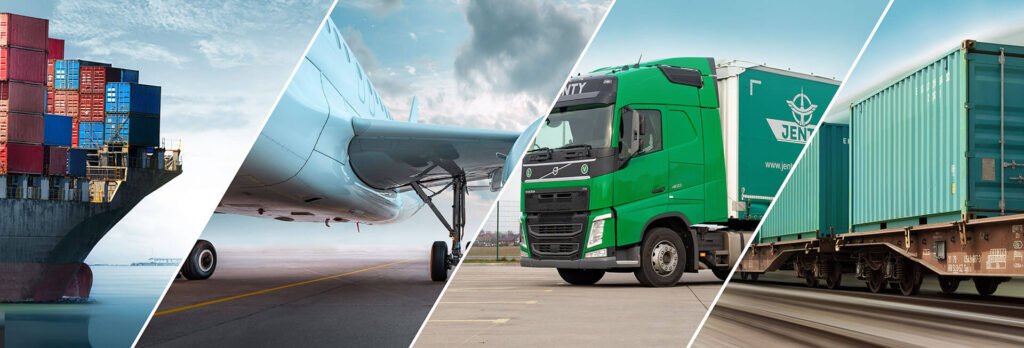
In today’s interconnected global economy, efficient transportation is the foundation of successful trade and supply chain operations. Businesses rely on dependable logistics networks to move goods across borders, continents, and markets with speed, accuracy, and reliability. To meet these demands, modern logistics providers offer road, air, and sea transport solutions, each playing a vital role in ensuring seamless cargo movement.
By combining these three transport modes, companies can optimise delivery timelines, manage costs effectively, and maintain full visibility across their supply chains.
Understanding Multimodal Transportation
Multimodal transportation refers to the use of more than one mode of transport—road, air, and sea—to move goods from origin to destination. This integrated approach allows logistics providers to leverage the strengths of each transport method while minimising limitations.
Road, air, and sea transport are not competing solutions; rather, they are complementary components of a unified logistics strategy. When effectively coordinated, they provide flexibility, scalability, and resilience in global trade operations.
Road Transport: The Backbone of Inland Logistics
Road transport serves as the critical link between ports, airports, warehouses, and final delivery destinations. It plays an essential role in both domestic distribution and cross-border logistics, ensuring goods reach their final destination efficiently.
Key Advantages of Road Transport
-
Flexible routing and scheduling
-
Direct door-to-door delivery
-
Cost-effective for short and medium distances
-
Ideal for regional and domestic distribution
Road transport supports a wide range of cargo types, including palletised goods, industrial materials, consumer products, and high-value shipments. Full Truckload (FTL) and Less Than Truckload (LTL) options allow businesses to tailor transport capacity to their operational needs.
Integrated tracking and route optimisation systems further enhance reliability, enabling timely deliveries and improved supply chain coordination.
Air Transport: Speed and Precision for Time-Critical Cargo
Air transport is the fastest mode of cargo transportation and is essential for industries where speed, security, and precision are critical. It is commonly used for urgent shipments, high-value goods, and time-sensitive supply chains.
Key Advantages of Air Transport
-
Rapid international transit times
-
High levels of cargo security
-
Reliable scheduling
-
Global airport connectivity
Air freight is particularly suitable for pharmaceuticals, electronics, medical supplies, critical spare parts, and perishable goods. Advanced handling procedures and compliance with international aviation standards ensure cargo integrity throughout the journey.
When integrated with road transport and warehousing, air freight enables end-to-end logistics solutions that support fast-moving global operations.
Sea Transport: The Foundation of Global Trade
Sea transport remains the most cost-effective and scalable method for moving large volumes of cargo internationally. It is the backbone of global trade, handling the majority of the world’s freight movement.
Key Advantages of Sea Transport
-
Economical for large and heavy shipments
-
Suitable for long-distance international trade
-
Supports a wide range of cargo types
-
Lower carbon footprint per unit compared to other modes
Ocean freight services include Full Container Load (FCL), Less Than Container Load (LCL), refrigerated containers, and specialised equipment for oversized or project cargo. Sea transport enables businesses to move goods efficiently across continents while maintaining cost control.
With modern tracking systems and port coordination, sea freight offers improved visibility and reliability despite longer transit times.
The Power of Integrated Transport Solutions
The true strength of modern logistics lies in the integration of road, air, and sea transport into a single, coordinated system. By combining these modes, logistics providers can design tailored solutions that meet specific cargo requirements, delivery timelines, and budget constraints.
For example:
-
Sea transport may be used for long-haul international shipping
-
Road transport connects ports to warehouses and final destinations
-
Air transport supports urgent or high-priority shipments
This multimodal approach reduces bottlenecks, enhances flexibility, and ensures continuity across complex supply chains.
Technology and Visibility Across Transport Modes
Digital logistics platforms play a crucial role in managing multimodal transport operations. Real-time tracking, automated documentation, and centralised shipment management provide customers with full visibility across road, air, and sea transport stages.
These technologies enable proactive decision-making, faster issue resolution, and improved operational efficiency, ensuring cargo moves smoothly from origin to destination.
Conclusion
Road, air, and sea transport each serve a distinct and essential role in global logistics. When combined into an integrated transport strategy, they provide businesses with the flexibility, reliability, and scalability required to succeed in international trade.
By offering all three transport modes, logistics providers ensure that cargo can move efficiently across borders and markets, regardless of complexity or distance. This comprehensive approach supports resilient supply chains and drives sustainable growth in an increasingly connected world.